
If you have been trying to conceive without success, the prospect of a fertility evaluation can feel both hopeful and overwhelming. The good news is that a standard workup follows a predictable sequence, and understanding that sequence ahead of time can take some of the uncertainty out of your first appointment. Here is what a typical evaluation looks like for women pursuing infertility treatment in Boise, and what each step is designed to tell your care team.
When to Schedule a Fertility Evaluation
The standard guideline is to seek an evaluation after twelve months of regular, unprotected intercourse without conception. For women over 35, that window shortens to six months, and for women over 40, most OB-GYNs recommend an evaluation right away. Conditions such as irregular cycles, known endometriosis, prior pelvic surgery, or a partner with a known fertility issue also warrant an earlier visit.
Reaching out sooner rather than later is not a sign of impatience. Time is one of the most important variables in fertility care, and an early workup often reveals straightforward issues that respond well to treatment.
The First Consultation: History and Physical
Your first appointment is largely a conversation. Your provider will ask about your menstrual history, prior pregnancies, contraceptive use, surgeries, medications, lifestyle factors, and family history. If you have a partner, their health history matters too, and bringing them along can be helpful. Come prepared with dates and details where you can — the timeline of when you started trying, the regularity of your cycles, and any prior testing you have had done.
A focused physical exam, including a pelvic exam, is typically part of this visit. Your provider may also order baseline labs such as thyroid function, prolactin, and a complete blood count to rule out common contributors before moving to fertility-specific testing.
Hormone Panels and Ovarian Reserve Testing
The next step is usually bloodwork timed to your cycle. On day three of your period, your provider will check follicle-stimulating hormone (FSH) and estradiol, which together give a sense of how your ovaries are responding to early-cycle signals. Anti-Müllerian hormone (AMH) can be drawn at any point in the cycle and offers an estimate of your remaining egg supply, often called ovarian reserve.
If your cycles are irregular, additional hormones such as luteinizing hormone (LH), testosterone, and DHEA-S may be checked to evaluate for conditions like polycystic ovary syndrome. A progesterone level drawn about a week before your expected period helps confirm whether you are ovulating.
Imaging: Ultrasound and Tubal Evaluation
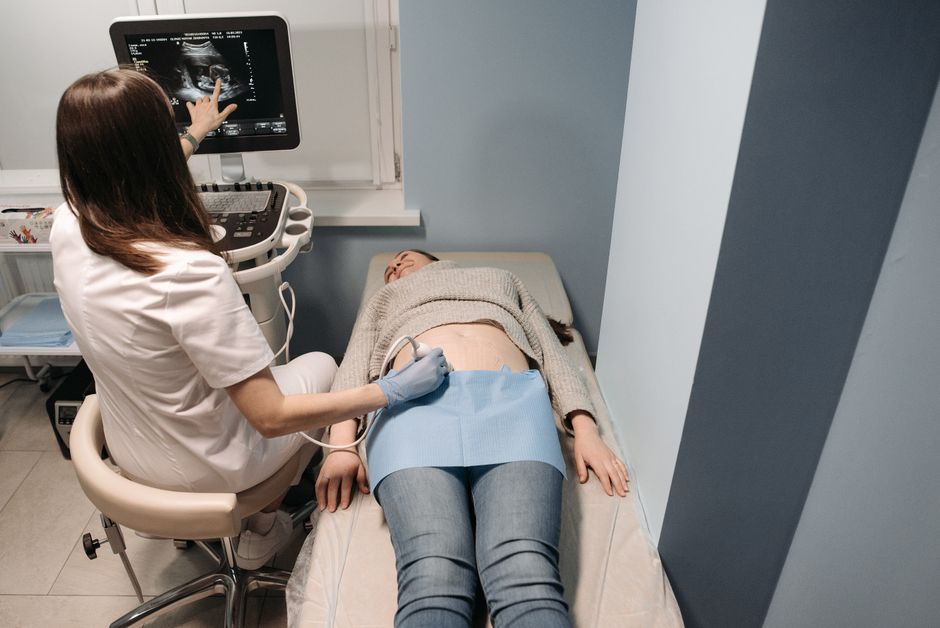
A transvaginal ultrasound gives your provider a detailed look at your uterus and ovaries. It can identify fibroids, polyps, ovarian cysts, and the antral follicle count — another marker of ovarian reserve that complements the AMH result.
To evaluate whether your fallopian tubes are open, the most common test is a hysterosalpingogram, or HSG. A small amount of contrast dye is introduced through the cervix while X-ray images are taken, showing the shape of the uterine cavity and whether the dye spills freely from the tubes. The procedure takes about fifteen minutes and is usually scheduled in the first half of your cycle, after your period ends but before ovulation. Some practices in the Treasure Valley also offer saline infusion sonography, which uses ultrasound rather than X-ray to evaluate the uterine cavity.
Semen Analysis
About a third of fertility challenges involve a male factor, and roughly another third involve a combination of male and female factors. For that reason, a semen analysis is part of the standard workup from the start. It evaluates sperm count, motility, and morphology, and it is one of the simplest, least invasive tests in the entire evaluation.
If results are abnormal, the test is typically repeated after several weeks, since sperm production is sensitive to short-term factors like illness or stress. Persistent abnormalities prompt a referral to a urologist or reproductive specialist for further evaluation.
Putting the Results Together
Once your labs, imaging, and your partner’s semen analysis are complete, your provider will sit down with you to review everything in context. In many cases, the workup reveals a clear direction — a treatable thyroid issue, a uterine polyp that can be removed, or a need for ovulation induction. In other cases, results are reassuring and the next step is timed intercourse with closer cycle monitoring. Sometimes no single cause is identified, which is called unexplained infertility, and treatment options still exist.
This is the appointment where it helps to come with questions written down. Ask what your results mean specifically, what the recommended next step is, what alternatives exist, and what the expected timeline and success rates look like for someone in your situation.
Preparing for Your First Appointment
Before you come in, track at least two or three of your most recent cycles, noting the first day of each period and any symptoms. Gather records of any prior testing, surgeries, or pregnancies, and write down medications and supplements you are taking. If you have a partner, ask them to be prepared with their own health history.
If you are in Boise, Meridian, Eagle, or elsewhere in the Treasure Valley and ready to begin a fertility evaluation, the next step is to schedule a consultation with an OB-GYN who offers infertility care. A focused first visit can set the rest of the process in motion and give you a clearer sense of the path ahead.
Featured image: Photo by Pavel Danilyuk on Pexels.
About the author : fencepro1